Denova
Natural Gas Detector
10-Year 100% Battery-Powered Natural Gas Alarm


Local Law 157: What You Need to Know
Overview of Local Law 157 (LL157)
Local Law 157, often referred to as the gas detector law, mandates the installation of both carbon monoxide/smoke detectors and natural gas detectors in all NYC residences. The law deferred the requirement for a natural gas detector until the establishment of a national industry standard. This law was introduced in response to two tragic gas explosions in 2014 and 2015, which led the New York City Council to act. Below are the essential points:
Origins: Enacted in 2016, LL157 required compliance with natural gas detector installations once a national detection standard was set.
- National Standard: The National Fire Protection Association (NFPA) released this standard (NFPA 715) in April 2022.
- Final Rule: On February 15, 2024, the Department of Buildings (DOB) issued the Final Rule, with an original compliance deadline of May 1, 2025.
- Deadline Extended: In July 2025, the City Council passed an amendment (Int. 1281-2025) delaying enforcement, citing limited device supply and high costs. On December 23, 2025, HPD adopted final rule amendments formalizing a new compliance date of January 1, 2027.
- Deadline Confirmed: DOB has confirmed that at least four manufacturers make compliant battery-powered natural gas alarms, so the January 1, 2027 compliance date is locked in.
Who Must Comply?
Properties required to comply with Local Law 157, as defined by the Housing Maintenance Code, include private dwellings as well as Class A and Class B multiple dwellings.
- Private Dwellings: Permanent residences.
- Class A Multiple Dwellings: One and two-family houses.
- Class B Multiple Dwellings: Transient accommodations such as hotels, lodging houses, and dormitories.
What Makes a Natural Gas Detector Compliant?
To meet the requirements of LL157, your natural gas detectors must adhere to the following standards:
- NFPA 715-2023 Compliance: Detectors must meet these standards.
- Installation Requirements: Detectors should be mounted within one foot of the ceiling, placed no more than 10 feet and no less than 3 feet horizontally from gas appliances.
- Approved Devices: Only detectors labeled with UL1484 or UL2075 certifications are acceptable.
- Power Sources: Detectors may be hardwired, plugged in, or battery-powered, especially in existing buildings.
Why Choose Denova Detect 10-Year Battery Powered Device?
F&F Supply has partnered with Denova Detect to offer the most reliable option on the market for New York City compliance:
- No Outlet Required: Denova Detect easily mounts to a wall or ceiling with just one screw, avoiding the need for an electrician.
- Long-Lasting Power: With a 10-year battery, there’s no need to constantly draw power from an outlet.
- No Cords Needed: Unlike plug-in units, there’s no need for unsightly and potentially unsafe cords.
- No Frequent Battery Replacement: Unlike plug-in units, which require a 9V battery replacement every 6 months, Denova Detect offers a “set it and forget it” solution for a full decade.
- Simple Installation: Building owners, maintenance personnel, or even tenants can easily install these detectors.
- Cost-Effective: Although the initial cost of Denova Detect may be higher, it eliminates the ongoing expenses associated with electricians, battery replacements, and continuous electricity usage, making it a smart financial and practical choice.
What’s Next? Preparing for LL157 Compliance
With the compliance deadline now confirmed for January 1, 2027, building owners and managers have a firm date to plan around. Given the scale of demand expected across NYC’s roughly 4.5 million apartments, early planning is still the best way to avoid supply shortages as the deadline approaches.
The F&F Supply team is committed to educating NYC residents and building managers on LL157 and helping ensure compliance. If you have any questions, feel free to reach out to a team member for assistance.
- 10-year battery and product service life.
- Voice Alerts in English & Spanish announce warnings of natural gas leak
- ETL Listed to UL 1484 Standard
- First and only battery-powered natural gas alarm in the U.S.
- Protection for less than 3¢ a day. No cost to operate
- Saves you money over time. Eliminates replacement battery and electricity costs
- No extension cord or outlet needed
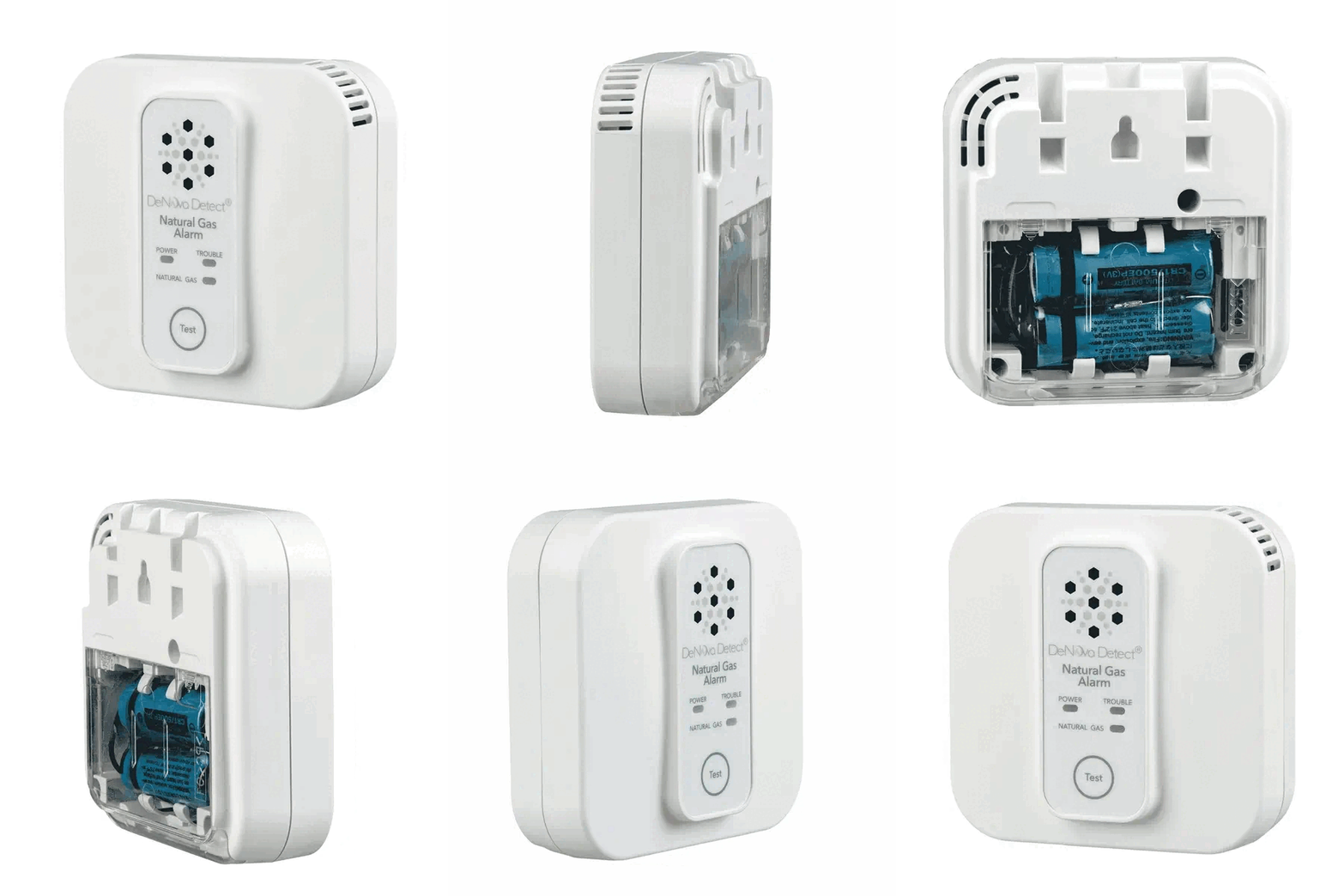

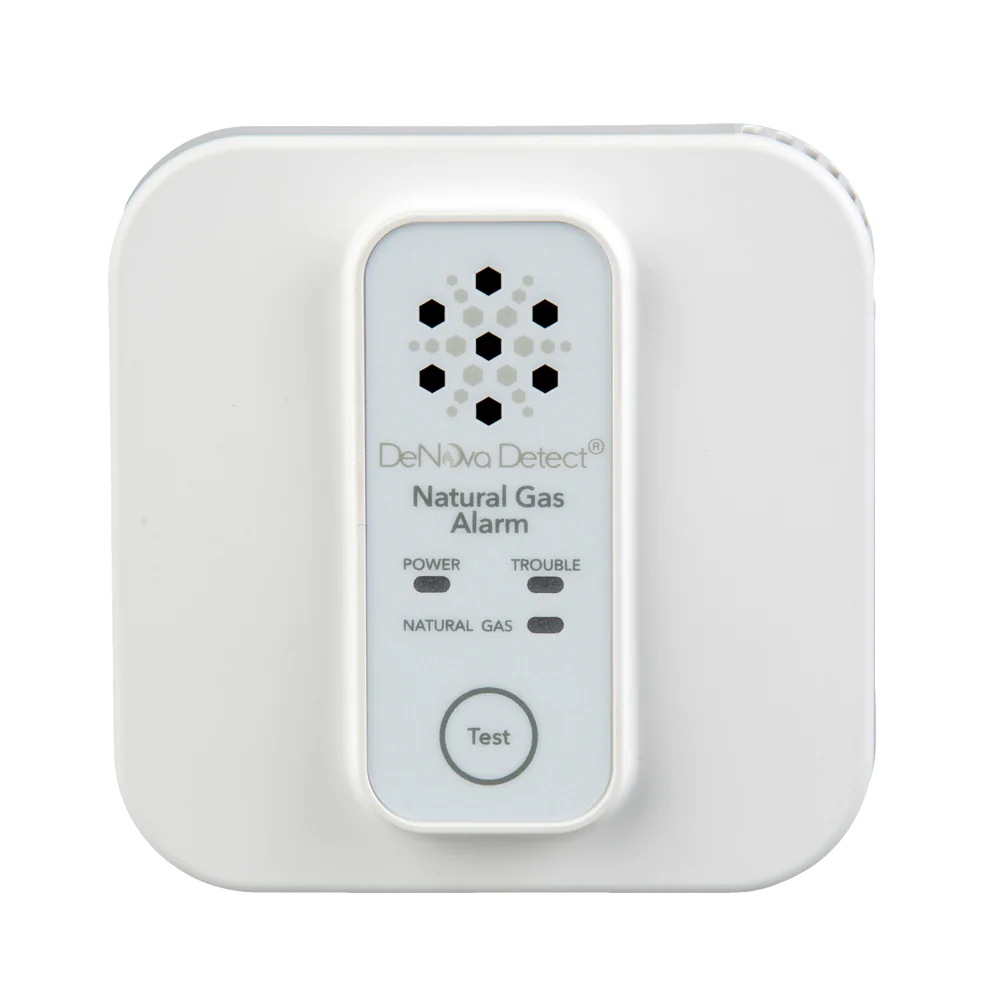
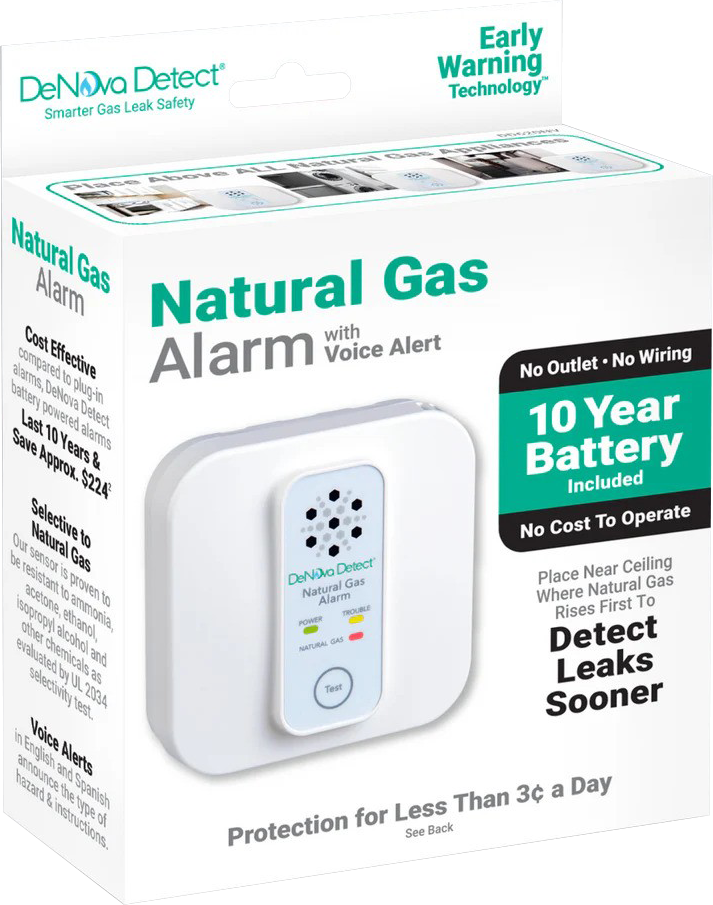
Preview of Alarm
Voice Alerts
English & Spanish - DD620NV
This product is rated 4.8 of 5.0 stars.
It has received 11 reviews.

quoted by

quoted by